What Is a Healing Environment?
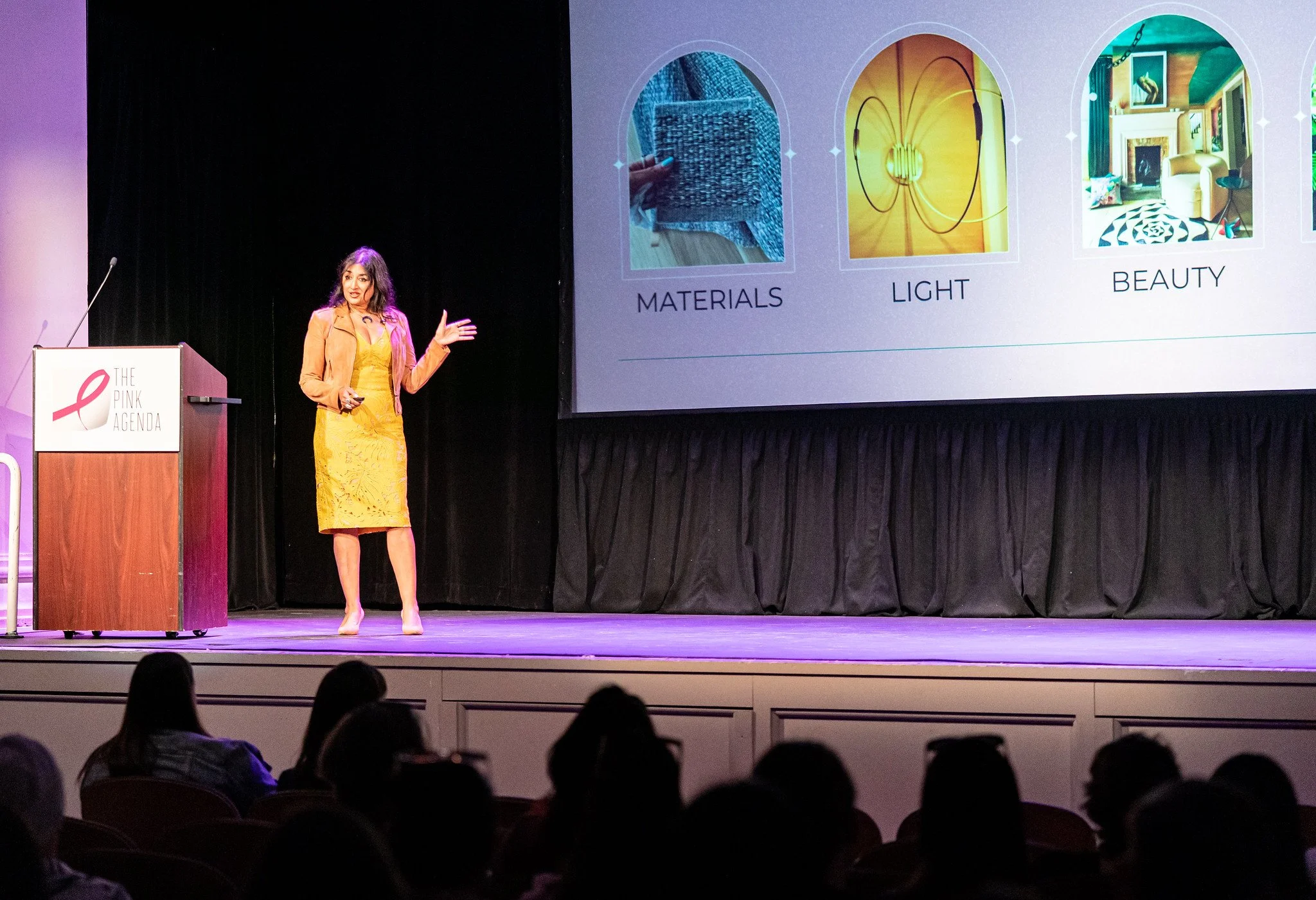
What if one of the most powerful influences on your health isn't found in a prescription bottle, but in the room you're sitting in right now? Most people think healing happens in hospitals or through medicine. I believe it also happens through the environments we create. A healing environment is not defined by location; it is defined by its impact. It is a space that supports the body’s ability to regulate stress, restore balance, and maintain well-being over time. This idea sits at the center of my work as a keynote speaker and designer. Design Is Medicine™ is my framework for understanding how our built environments influence health, resilience, and recovery. It draws on research in neuroaesthetics, circadian biology, biophilic design, and environmental psychology while translating those findings into practical strategies for homes, workplaces, and healthcare settings.
How Cancer Changed the Way I See Design
For more than two decades, I designed beautiful environments. It wasn’t until I experienced cancer that I began asking how beauty might influence biology. While I was convalescing, I began to instinctively design ways to experience beauty, especially when I wasn’t feeling so beautiful. I called them my Rituals of Reverence. And instead of tuning out, I began tuning into my environment in a whole new way.
The Science of Healing Environments
Growing research in neuroaesthetics, environmental psychology, and epigenetics suggests that our surroundings can influence: stress regulation, sleep quality and circadian rhythm, immune function, cognitive performance, emotional resilience, and other factors associated with health. In other words, the spaces where we live and work are not passive settings—they are actively interacting with our bodies.
Modern Spaces, Ancient Biology
Many modern spaces are designed primarily for energy efficiency, cost reduction, and visual appeal rather than human biology. As a result, many spaces—both work and home—unintentionally create chronic low-level stress, overstimulation, and poor lighting conditions that are divorced from our circadian rhythm. Over time, our bodies adapt to this imbalance without being consciously aware. But our bodies are aways responding.
Three Principles of Design Is Medicine™
A healing environment is not a design style. It is a set of conditions that supports regulation and restoration. I believe healing environments rest on three interconnected principles:
1. Circadian Alignment — designing with light that supports our biological rhythms.
2. Biophilia — restoring our relationship with nature using natural materials and living systems.
3. Neuroaesthetics — creating sensory experiences that calm the nervous system and support emotional well-being.
Circadian Alignment
My interest in the relationship between light and health led me to earn my certification in Applied Quantum Biology where I examined our space through the lens of our ancient circadian rhythm. I discovered how our modern homes and workspaces often overlook the importance of natural daylight, opting for efficiency over alignment, cost reduction over well-being. I prioritized solutions that didn’t involved a costly renovation as I felt a level of urgency to create actionable shifts for maximum impact. I now apply this lens to the spaces I design and the consulting work I do with organizations.
Biophilia
One of the defining challenges of modern life is our growing separation from the natural world. While chronic disease has many causes, our biology evolved in close relationship with daylight, seasonal rhythms, and natural materials. If you think of our human existence on this planet as a twenty-four hour clock, we only have had electricity for the last 30 seconds. The majority of our time has been spent outside, in connection with nature, and our biology still reflects this indelible link. Modern homes don’t breathe, and incarcerate our biology more than support it. What if the solution is more simple than moving back out under the stars? Biophilia doesn’t just mean bringing plants indoors although I advocate for indoor jungles, any day. It also means designing with natural materials that support our biology. Certain synthetic flooring and furnishings can contribute to indoor air pollution through volatile organic compounds (VOCs) so making material selections is an important consideration. What if we just replaced synthetic materials like polypropylene with natural and sustainable ones like wool? Using natural materials in our spaces is biophilic design. Our environments should support—not ignore—our evolutionary inheritance.
Neuroaesthetics
As I was recovering from my cancer treatment, I began to redesign my home using beauty as my guide. Looking back, I realized I was instinctively applying principles that are now being explored through the emerging field of neuroaesthetics. Through design, I realized that I was shifting from an activated (I.e. sympathetic nervous system) to my parasympathetic state where the healing actually happens. Even when I couldn’t taste anything, I brought out my best dishes, added violas to my sliced banana, used my best cloth napkins, lit candles, and sprinkled rose petals on my table. I was instinctively practicing the science of neuroaesthetics. For more on this, please read my book, PURGATORY TO PARADISE: How Cancer Helped Me Design an Authentic Life. This is now a cornerstone of my design and consulting work.
Designing With Our Biology, Not Against It
Organizations invest heavily in leadership development, wellness initiatives, and performance optimization. Yet one of the most influential factors affecting employee well-being and patient experience often goes unnoticed: the physical environment itself. Healing environments are not simply a design decision—they are a strategic investment in human performance, resilience, and care. Even small spatial changes can influence employee focus, burnout, patient recovery rates, and cognitive fatigue. This is why design is not just an aesthetic decision, it is an organizational health strategy.
Where to Begin
What does a healing environment look like in practice? While it’s not a one-size-fits-all, I recommend starting with a few simple principles. Receiving natural daylight whenever possible, modulating the lighting to align with circadian health, access to nature and implementing natural materials, and designing with all your senses are a great way to start. We are living in an era of increasing burnout and chronic diseases. And in this context, your environment becomes one of the most underused tools for supporting well-being. What if one of the most overlooked ways to support our health begins by improving the spaces we live inside?
Why Healing Environments Matter at Work
As burnout, chronic disease, and mental health challenges like anxiety and depression continue to rise, conversations about health can no longer focus solely on treatment. We must also consider prevention, restoration, and the environments we inhabit every day. Healing environments are not a luxury reserved for high-end homes or hospitals. They are becoming an essential part of how we think about our health.
We Shape the Environments That Shape Us
We cannot always choose our diagnosis. We cannot always control our circumstances. But we can shape the environments that shape us. That is why I believe healing environments belong in the conversation about healthcare, workplaces, leadership, and everyday life.
Because our environments are never neutral.
Design Is Medicine.™
If you're interested in bringing Design Is Medicine™ to your organization, I'd love to continue the conversation.
Subscribe to my Design Is Medicine™ newsletter for new essays, research, and observations on beauty, biology, and the built environment.