Field Notes | Mahwish Syed

Observations on beauty, biology, culture, and the built environment.

Every space tells a story. These essays explore what I've learned as an anthropologist, designer, and author studying the relationship between beauty, human experience, and the environments we inhabit. From healthcare and hospitality to homes, workplaces, and everyday rituals, each Field Note is an invitation to see our surroundings differently—and to recognize that the spaces we create quietly shape our lives.

When Beauty Was the Car I Drove

What if I told you that the way to healing isn’t just medicine.  What if beauty is, as well? For more than twenty years, I’ve designed beautiful interiors and fashion for other people, but it wasn't until cancer that I began to question its meaning.

Because cancer didn’t only change my body. It untethered my mind. I began living in that liminal space between the person I used to be, and the one I didn’t yet know I’d become. I was suspended—not sick enough to completely disappear, not well enough to stay as I used to be. 

I felt completely out of control. I couldn’t control my diagnosis. I couldn’t control the treatment protocol. But what I could control was how I moved through that limbo, that uncertainty. So I stopped searching for certainty.

I reached for beauty instead.


How Beauty Became My Practice

It started with not being able to taste the spicy Pakistani dishes that my mother lovingly prepared during my chemo.  The spices suddenly overwhelmed me. What I could tolerate was a humble sliced banana. So, I dusted off my best dishes. I plucked violas from my garden, and decorated those meager medallions with something beautiful. I unfolded my best linen napkins, lit that candle—a birthday gift I was saving for a special occasion, and poured my water into my crystal wine glass. If I couldn’t taste, I could at least heighten my other senses to create a beautiful experience.

I played my favorite EDM while lying on the radiation table, reminding me of that version of myself speeding to biology class blaring Nine Inch Nails in my white Mazda. I loved that version of myself, where life felt full of possibility and hope just happened to be the air I breathed.

Little by little, beauty stopped being something I created for others. It became a powerful reminder of who I still was. When the reflection in the mirror looked nothing like the woman I once knew, I taped a photograph of myself at fifteen on the mirror above my bedroom dresser—a glimpse of a girl beaming with laughter in her olive combat boots and oversized army jacket draped over a grey pin-striped pencil skirt at the end of the driveway. She was a talisman—a symbol of innocence, love, and hope that still existed in me, even if my swollen face with the disappearing eyebrows and falling hair couldn’t show it.

I dressed myself up for the twelve-hour chemotherapy sessions at the hospital, adorning myself with my late grandmother’s jewelry. I wrapped my neck in a silk scarf from an aunt who loved more fiercely than anyone I’d ever known, dabbing lavender essential oil on the corners of it to remind me of a visit to a glorious, sun-drenched lavender field in California’s Santa Ynez Valley. 

Scent is the fastest way to time travel, you know. I wasn’t ignoring what was happening or trying to escape it. I was choosing beauty in the face of sheer terror. 

Especially then.


I Didn't Wait to Heal Before I Felt Beautiful

“I didn’t wait to heal in order to feel beautiful. I felt beautiful in order to heal.” I wrote those words years ago in Purgatory to Paradise.

We’re taught that beauty is an outcome—something we earn after we heal, after we can afford that renovation or work of art. But cancer taught me the opposite. 

Beauty wasn’t my destination.

It was my vehicle to healing.


The Art That Waited for Me

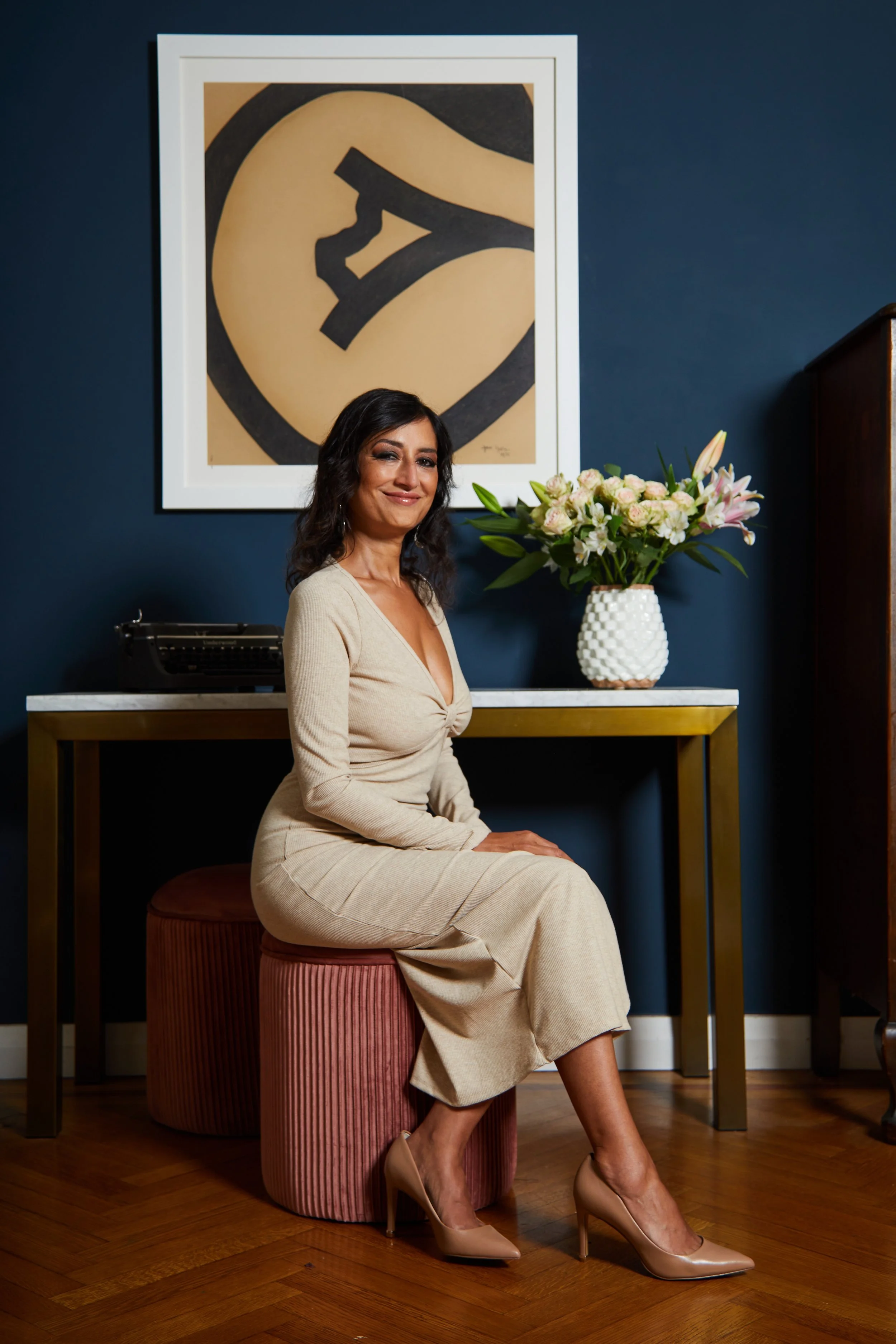
Ten years before my diagnosis, I was sourcing artwork for a client in a gallery on Madison Avenue when I came across a charcoal drawing that took my breath away. It was of a woman, her body delineated by a bold calligraphic line against sepia paper, reminding me of the sinuous lines of Urdu and Arabic script I practiced writing as a little girl in Pakistan. The artist had distilled the divine feminine with such bold spareness that it was both an homage to 7th century Kufic Arabic as well as 18th century Japanese artist, Katsushika Hokusai’s, woodblock prints. At that time, I didn’t even consider bringing it home. That kind of art belonged to other people—not me.

Cancer changed that.

It didn't simply change my perspective on life—it changed my understanding of what I deserved to live with. Cancer emboldened me to break out of the waiting room of life, and actively seek beauty.  Bringing that drawing home all those years later became an act of choosing life today, despite the uncertainty of tomorrow. I didn't buy it because I could finally afford it, I acquired it because I had a new perspective. Cancer taught me that I was worthy of living with beauty in my now.


When Science Finally Caught Up

At the time, I believed this sensory practice which I named my “Rituals of Reverence,” was simply personal. I discovered later that it was a part of something much larger. Researchers like Susan Magsamen and Anjan Chatterjee were asking many of the same questions I had lived firsthand.

How do beauty, art, and our sensory environments shape the brain? Could aesthetic experiences influence stress, attention, emotion, and well-being? The science didn't create my experience—it helped me to understand it.

Susan Magsamen and Ivy Ross explained in their seminal book, Your Brain on Art: How the Arts Transform Us, what I was instinctively doing: “the arts offer us a way to slow down, feel our emotional pain, and let it unfold, revealing a changed but full human being.”

Beauty wasn't distracting me from illness.

It allowed me to grieve my old identity, cope with the rigors of treatment, and alchemize my pain. I didn't know it then, but I was instinctively regulating my nervous system through my senses. I was anchoring into my parasympathetic state.

Dr. Anjan Chatterjee wrote in The Aesthetic Brain: How We Evolve to Desire Beauty and Enjoy Art that our brains are active participants in how we perceive and connect with the world, and that surrounding ourselves with beauty shapes who we become.

That charcoal drawing now hangs in my home and I gaze upon her every day. She became my Persephone—the goddess who journeyed into the Underworld and emerged transformed.

And in the words of Dr. Chatterjee, that divine symbol has shaped the woman I have become today.


Beauty Is Something We Practice

I used to think beauty was something designers created. Now I see it so very differently.

Beauty is something we practice.

You don’t need to buy an expensive piece of art to practice beauty. Begin where you are.

Open your curtains to let that sunlight inside. Notice how that morning light glows against your bedcover. Place a bud vase with a single stem of a flower you love—a rose, a sunflower, or a dahlia from your garden. Use your wedding china now. Light that expensive candle today—don’t wait for a special occasion. Make today special. Play your favorite songs as a reminder of a great concert you went to or just a moment of innocence. Engage every single one of your senses to create beauty no matter what is happening in your life.

Beauty is not an object. It is a daily conversation between your senses and your brain, between your identity now and the one that is arriving.


Beauty Was Never the Destination

I used to believe beauty was the destination—the finished room or the impeccably designed dress.

Cancer taught me it was the vehicle.

I didn't wait to heal before I felt beautiful.

I felt beautiful so that I could heal.

Because beauty isn't the reward for healing.

It's how we heal.


About Field Notes

Field Notes is an ongoing series exploring beauty, neuroaesthetics, biology, culture, and the built environment through the lens of Design Is Medicine™.

Continue the Conversation

If this Field Note resonated with you, I'd love to hear your thoughts. Questions, collaborations, or speaking inquiries are always welcome.

Enjoyed this Field Note?

Subscribe to the Design Is Medicine™ newsletter on LinkedIn for new essays, observations, and research exploring beauty, biology, and the built environment.

Research & Reading

Syed, Mahwish. Purgatory to Paradise: How Cancer Helped Me Design an Authentic Life.

Magsamen, Susan & Ross, Ivy. Your Brain on Art: How the Arts Transform Us.

Chatterjee, Anjan. The Aesthetic Brain: How We Evolve to Desire Beauty and Enjoy Art.

Before Anyone Speaks, Your Environment Already Has

Every environment tells a story before anyone says a word.

Recently, I had the privilege of designing the reception area for Red Door Community, an extraordinary organization supporting people impacted by cancer.

The Executive Director, Migdalia Torres, shared something that stopped me in my tracks:

“The reception area has transformed the experience of arriving…”

I couldn't stop thinking about the word.

Arriving.


Experiencing the Space After the Reveal

One of my favorite moments as a designer is not the big reveal but what happens weeks or months later. When people have the chance to settle into a newly designed space for a while and describe how that space makes them feel, it is a very special moment for me.

Her words went beyond the furniture or the color palette. She described how people felt. 

For years, I've believed that our environments are more than passive backdrops—they actively shape our experience. They communicate before anyone says a word. They can cultivate calm, belonging, connection, and care. They are active participants in how you experience not just your space but also your well-being.

Liminal Spaces

Recently, I was discussing the movie Backrooms with my son, who had just come home after seeing it. He described a labyrinth of empty corridors, vacant office buildings, and anonymous transitional spaces that felt consistently unsettling. My curiosity was piqued so I began to read about it, which led me to a BBC article featuring neuroarchitectural researcher Meredith Banasiak, who explained that liminal spaces heighten our brain's sensitivity to uncertainty because they exist between one destination and the next. Without meaningful environmental cues, our brains remain on alert, constantly trying to determine where we are and what comes next. Banasiak notes that trauma survivors often find these environments especially challenging. 


In Backrooms, that idea is taken to its extreme. The building itself becomes a physical metaphor for memories “dissolving into themselves.” What if there is no monster hiding in the shadows but the space itself becomes the villain?


That observation stayed with me because it echoed something I've long believed: environments are not neutral. They shape our emotions, influence our physiology, and quietly impact how we experience a place.

The environment is the actor.

In fact, I wrote about this years ago in Purgatory to Paradise:

"For instance, colors affect your mood. A horror movie uses a completely different tint than a rom-com." (p. 51)

Filmmakers have long understood that environments shape emotion. We deliciously anticipate this long before we’ve settled into our theater seats. Yet when it comes to our homes, hospitals, workplaces, and schools, we often treat the environment as little more than a backdrop. What if we've been overlooking one of the most influential participants in our daily lives?

During my own cancer treatment, I was practicing the art of neuroaesthetics long before I had the scientific language to describe it.

Now, I realized that I hadn’t simply designed a reception area.


I had designed a liminal space.


A threshold.


Why Your Space Matters

We’ve inadvertently parsed out a binary approach to spaces that I find incredibly problematic. For decades, we've treated design as a choice between function and beauty—as though they're separate goals. I think we've been asking the wrong question. I’d rather ask a different set of questions altogether.

In the case of a reception area, what does it feel like to arrive? 

Does the space communicate inclusivity? Does it calm the nervous system? Does it encourage connection? Does it make someone feel seen before they’ve spoken a word?

Whether this is a lobby, a hospital, an office, a school, a hotel, or your home, your environment plays a significant part on your sense of belonging, your emotions, your physiology, your nervous system, and ultimately your health. Whether I'm designing a healthcare environment, a workplace, or someone's home, my work begins long before selecting furniture or choosing colors. It begins by asking how people deserve to feel—and how can the environments I create support that.


Red Door Community Field Notes

My intention was to create a space that spoke before anyone ever opened their mouth. 

Long before I selected materials, designed the layout and flow of the furniture, or imagined that first impression as those elevator doors opened, I designed for meaning. 

How could the space cultivate belonging, comfort, care, and calm for someone walking through the door in active cancer treatment?

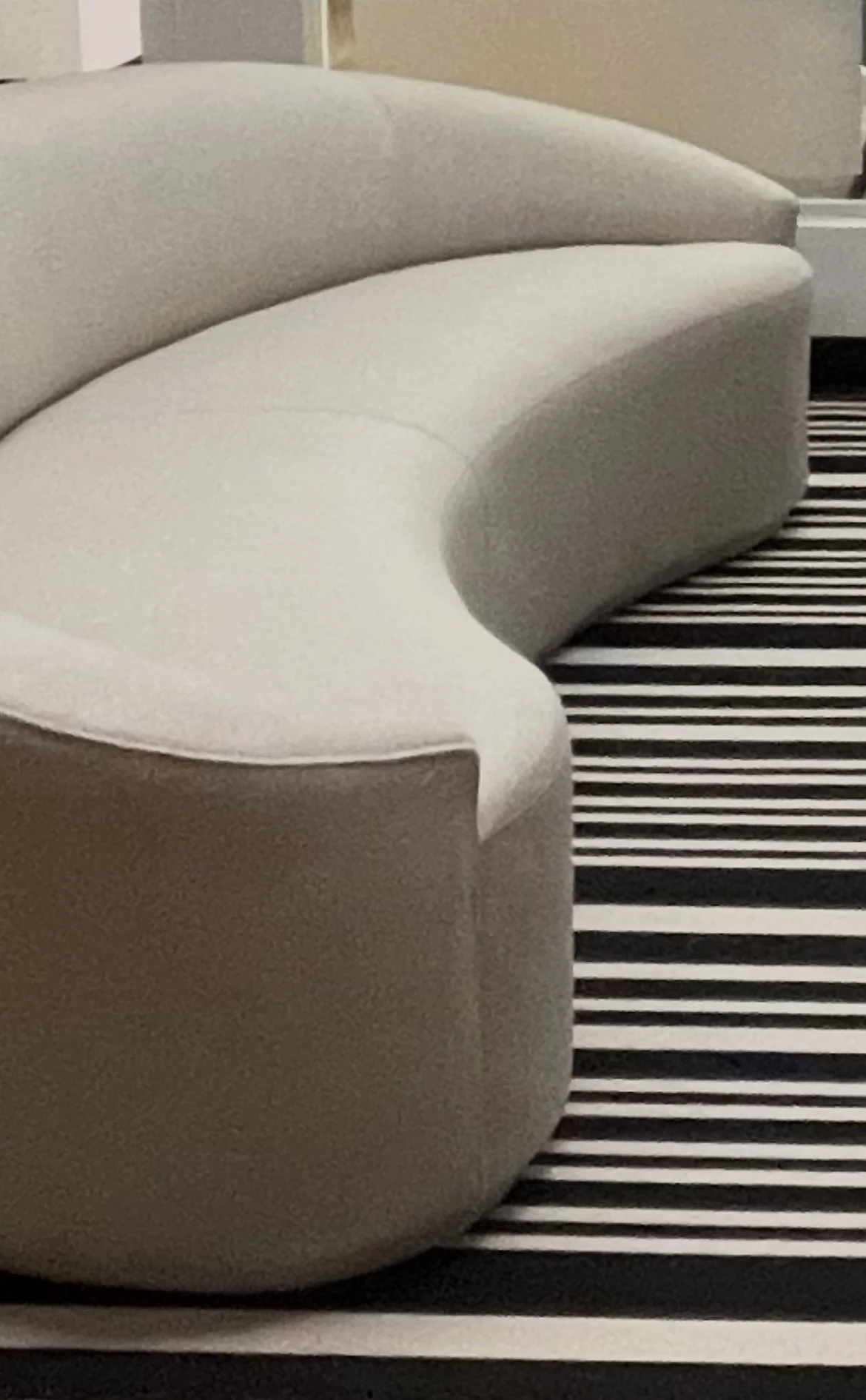
As I thought about the space, I wasn't simply selecting furniture. I was thinking about one of humanity's oldest rituals: gathering. Across cultures, gathering has always been one of the ways we create safety and belonging. For thousands of years, people gathered around a fire to share stories, comfort one another, and build community. Two circular sofas shaped like the crescent moon mirrored each other to create conversation and connection. Today, a circular coffee table can quietly serve a similar purpose as that fire. The space invites us—not just to wait—but to gather. And as someone who’s gone through the isolation of cancer, I know connection can be its own medicine.


Instilling Comfort

For me, the greatest measure of a successful project isn't how it photographs—it's how it changes the experience of the people who move through it. Several weeks later, Executive Director, Migdalia Torres shared these reflections:

“The reception area has transformed the experience of arriving at Red Door Community. From the moment members, volunteers, staff, and visitors get off the 4th floor elevator, they describe walking into a space that feels warm, calming, and inviting.  The design of the lobby instills a tone for the sense of comfort and belonging that is at the heart of our mission.

For our staff, it's a joy to begin each day in a space that reflects who we are as an organization. The design is both beautiful and functional, creating an environment that immediately communicates care and connection. We continue to receive compliments from members and visitors who often comment on how peaceful and welcoming it feels.”


The Takeaway

Beautiful design isn't simply something we see. 

It's something we experience. 

The greatest value of a space isn't found in its finishes or furnishings. It's found in the way it impacts the people who move through it. The same environmental principles that filmmakers use to create psychological tension can be intentionally reversed to cultivate psychological safety.

At Red Door Community, I wasn’t just trying to create a beautiful reception area. 

I was transforming the experience of arriving. 

I was designing the liminal space where someone leaves the outside world and takes their first emotional step into comfort, connection, and belonging.

Because before anyone speaks, the environment already has.


About Field Notes

Field Notes is an ongoing series exploring beauty, neuroaesthetics, biology, culture, and the built environment through the lens of Design Is Medicine™.

Continue the Conversation

If this Field Note resonated with you, I'd love to hear your thoughts. Questions, collaborations, or speaking inquiries are always welcome.

Enjoyed this Field Note?

Subscribe to the Design Is Medicine™ newsletter on LinkedIn for new essays, observations, and research exploring beauty, biology, and the built environment.

Selected Reading

Taylor, Alex. Endless creepy yellow corridors, 30bn TikTok views - and now a Hollywood film, BBC News.

Motzek, T., Büter, K., & Marquardt, G. Environmental Cues in Double-Occupancy Rooms to Support Patients With Dementia. HERD: Health Environments Research & Design Journal.

Syed, Mahwish. Purgatory to Paradise: How Cancer Helped Me Design an Authentic Life. (Chapter 3, “My Fall into the Underworld”).

Healing Environments: Why Design Is Medicine™

What Is a Healing Environment?

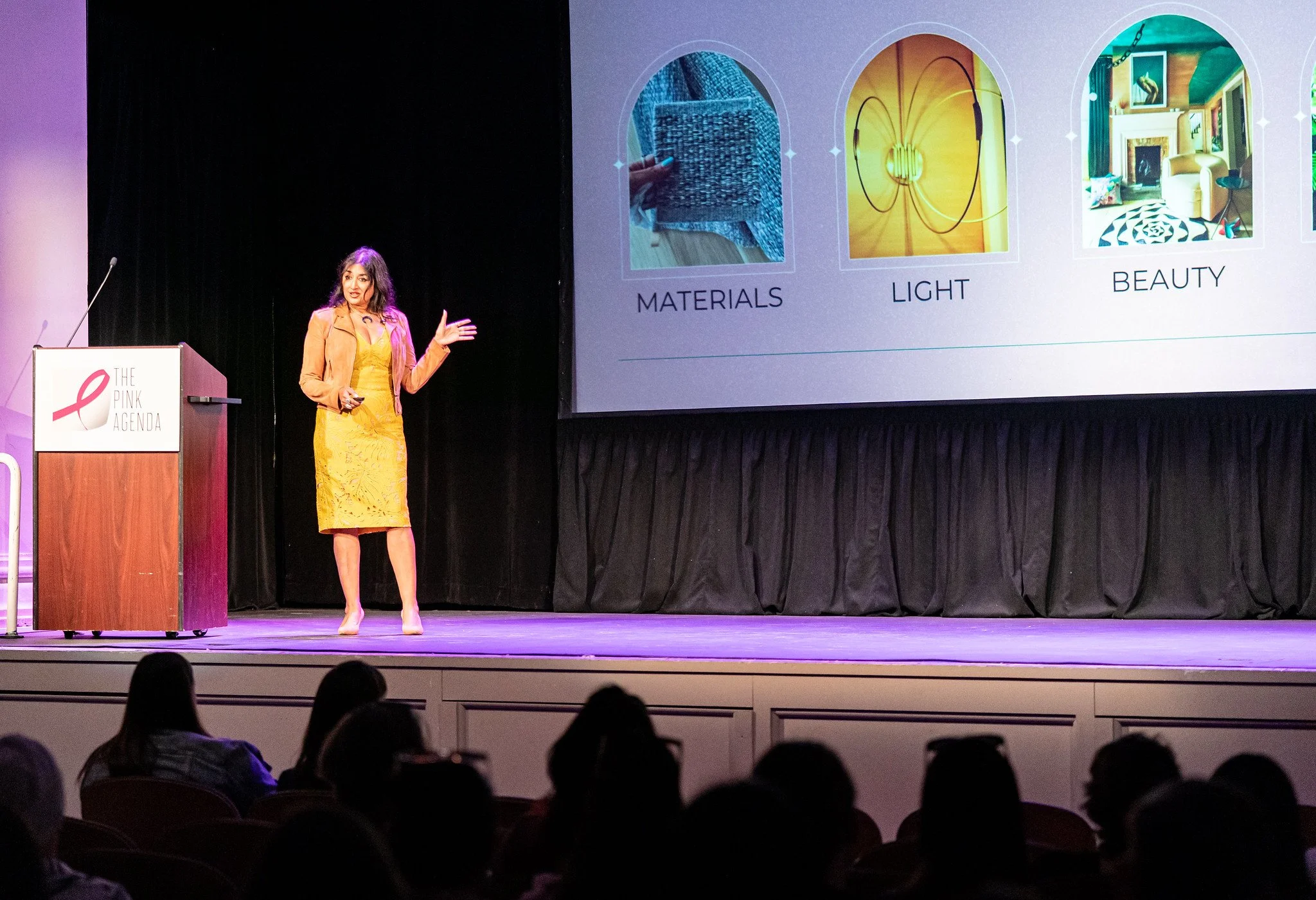
What if one of the most powerful influences on your health isn't found in a prescription bottle, but in the room you're sitting in right now? Most people think healing happens in hospitals or through medicine. I believe it also happens through the environments we create. A healing environment is not defined by location; it is defined by its impact. It is a space that supports the body’s ability to regulate stress, restore balance, and maintain well-being over time. This idea sits at the center of my work as a keynote speaker and designer. Design Is Medicine™ is my  framework for understanding how our built environments influence health, resilience, and recovery. It draws on research in neuroaesthetics, circadian biology, biophilic design, and environmental psychology while translating those findings into practical strategies for homes, workplaces, and healthcare settings.


How Cancer Changed the Way I See Design

For more than two decades, I designed beautiful environments. It wasn’t until I experienced cancer that I began asking how beauty might influence biology. While I was convalescing, I began to instinctively design ways to experience beauty, especially when I wasn’t feeling so beautiful. I called them my Rituals of Reverence. And instead of tuning out, I began tuning into my environment in a whole new way.


The Science of Healing Environments

Growing research in neuroaesthetics, environmental psychology, and epigenetics suggests that our surroundings can influence: stress regulation, sleep quality and circadian rhythm, immune function, cognitive performance, emotional resilience, and other factors associated with health. In other words, the spaces where we live and work are not passive settings—they are actively interacting with our bodies.


Modern Spaces, Ancient Biology

Many modern spaces are designed primarily for energy efficiency, cost reduction, and visual appeal rather than human biology. As a result, many spaces—both work and home—unintentionally create chronic low-level stress, overstimulation, and poor lighting conditions that are divorced from our circadian rhythm. Over time, our bodies adapt to this imbalance without being consciously aware. But our bodies are aways responding.


Three Principles of Design Is Medicine™

A healing environment is not a design style. It is a set of conditions that supports regulation and restoration. I believe healing environments rest on three interconnected principles:

1. Circadian Alignment — designing with light that supports our biological rhythms.

2. Biophilia — restoring our relationship with nature using natural materials and living systems.

3. Neuroaesthetics — creating sensory experiences that calm the nervous system and support emotional well-being.


Circadian Alignment

My interest in the relationship between light and health led me to earn my certification in Applied Quantum Biology where I examined our space through the lens of our ancient circadian rhythm. I discovered how our modern homes and workspaces often overlook the importance of natural daylight, opting for efficiency over alignment, cost reduction over well-being. I prioritized solutions that didn’t involved a costly renovation as I felt a level of urgency to create actionable shifts for maximum impact. I now apply this lens to the spaces I design and the consulting work I do with organizations.


Biophilia

One of the defining challenges of modern life is our growing separation from the natural world. While chronic disease has many causes, our biology evolved in close relationship with daylight, seasonal rhythms, and natural materials.  If you think of our human existence on this planet as a twenty-four hour clock, we only have had electricity for the last 30 seconds. The majority of our time has been spent outside, in connection with nature, and our biology still reflects this indelible link. Modern homes don’t breathe, and incarcerate our biology more than support it. What if the solution is more simple than moving back out under the stars? Biophilia doesn’t just mean bringing plants indoors although I advocate for indoor jungles, any day. It also means designing with natural materials that support our biology. Certain synthetic flooring and furnishings can contribute to indoor air pollution through volatile organic compounds (VOCs) so making material selections is an important consideration. What if we just replaced synthetic materials like polypropylene with natural and sustainable ones like wool? Using natural materials in our spaces is biophilic design. Our environments should support—not ignore—our evolutionary inheritance.


Neuroaesthetics

As I was recovering from my cancer treatment, I began to redesign my home using beauty as my guide. Looking back, I realized I was instinctively applying principles that are now being explored through the emerging field of neuroaesthetics. Through design, I realized that I was shifting from an activated (I.e. sympathetic nervous system) to my parasympathetic state where the healing actually happens. Even when I couldn’t taste anything, I brought out my best dishes, added violas to my sliced banana, used my best cloth napkins, lit candles, and sprinkled rose petals on my table. I was instinctively practicing the science of neuroaesthetics. For more on this, please read my book, PURGATORY TO PARADISE: How Cancer Helped Me Design an Authentic Life. This is now a cornerstone of my design and consulting work.


Designing With Our Biology, Not Against It

Organizations invest heavily in leadership development, wellness initiatives, and performance optimization. Yet one of the most influential factors affecting employee well-being and patient experience often goes unnoticed: the physical environment itself. Healing environments are not simply a design decision—they are a strategic investment in human performance, resilience, and care. Even small spatial changes can influence employee focus, burnout, patient recovery rates, and cognitive fatigue. This is why design is not just an aesthetic decision, it is an organizational health strategy.


Where to Begin

What does a healing environment look like in practice? While it’s not a one-size-fits-all, I recommend starting with a few simple principles. Receiving natural daylight whenever possible, modulating the lighting to align with circadian health, access to nature and implementing natural materials, and designing with all your senses are a great way to start. We are living in an era of increasing burnout and chronic diseases. And in this context, your environment becomes one of the most underused tools for supporting well-being. What if one of the most overlooked ways to support our health begins by improving the spaces we live inside?


Why Healing Environments Matter at Work

As burnout, chronic disease, and mental health challenges like anxiety and depression continue to rise, conversations about health can no longer focus solely on treatment. We must also consider prevention, restoration, and the environments we inhabit every day. Healing environments are not a luxury reserved for high-end homes or hospitals. They are becoming an essential part of how we think about our health.


We Shape the Environments That Shape Us

We cannot always choose our diagnosis. We cannot always control our circumstances. But we can shape the environments that shape us. That is why I believe healing environments belong in the conversation about healthcare, workplaces, leadership, and everyday life. 


Because our environments are never neutral.


Design Is Medicine.™


If you're interested in bringing Design Is Medicine™ to your organization, I'd love to continue the conversation.

Subscribe to my Design Is Medicine™ newsletter for new essays, research, and observations on beauty, biology, and the built environment.

“Dressing the Goddess” by Alexandra Mann

My dear client, Alexandra Mann, wrote this and it still applies to the work that I do--whether it's fashion or interiors:

"Usually one thinks of anthropology in terms of someone going ‘into the field’ in a traditional sense," said Ms. Syed. "I tend to look at people’s identities as an insight into how they might want to present themselves to the outside world through what they wear." 

Ms. Syed’s unusual approach has yielded some unusual results. She is, in many ways, representative of a certain "downtown couture" style that many people find not only beautiful and unusual, but also accessible. "I have taken what is traditionally a luxury of haute couture and demystified it for women who have their own style," she said. 

Time-consuming, yes, but for Ms. Syed, absolutely essential. She believes that to truly do something well, she cannot just observe, take measurements and make something that will cover the outside of someone. She must also participate in understanding the person as a whole instead of only their physical manifestation. Clients say it is not just the end result that is beautiful; it is the process.

With her ability to see people from the inside out, Ms. Syed has gained a faithful following of diverse clients and is greeting new ones every day. From a woman celebrating her 30th birthday to a woman welcoming her 50th year, from brides who wore her dresses as far away as Tunisia and as nearby as the Wonder Wheel at Coney Island, to women who simply cannot find clothing in the department stores that quite expresses who they are, Ms. Syed has created exquisite one-of-a-kind pieces that transform a woman from the person she sees in the mirror every day to someone she may never have seen before: the goddess living within."

Source: https://www.nytimes.com/2014/10/19/fashion...

ILLUMINATED

ILLUMINATED

I have often found myself having profound discussions with perfect strangers–on an airplane, on a ferry, at a bus stop in North Africa and New York.  Crossroads, the ancient Greeks believed, were a point where time and space collided, where the spirit world crossed into the corporeal one, and where the Goddess Hecate ruled.

I’ve always felt that people were harbingers of messages for us from the Universe.  But we have to be receptive in order to truly listen to that message.  I suppose when we travel to an unfamiliar place, our senses are heightened as we take in different sights and sounds.  No longer are we on automatic pilot, walking through the same path we take every day, oblivious to the beauty right around us.

That is why a certain chance encounter with a person from another culture can be so meaningful.  But you don’t really have to go anywhere to achieve that sublime feeling.  It is always there if you open up to your familiar surroundings. Ironically, it took a meeting with Frederik Molenschot, the wonderful lighting designer with whom I was working with, to realize this.

Perhaps it was the jet lag (he had just flown in from Amsterdam) or perhaps as a artist, he recognized another creative mind in action.  But somehow, he confronted me with a question: What did I really want from life--from my life?  Could I fashion a life as rich and as creative as my soul craved?  I found myself at a crossroads, feeling like anything I chose was possible.  And all that I had experienced thus far– my failures and heartbreaks intertwined with my successes and joys--had led me to this exact point.

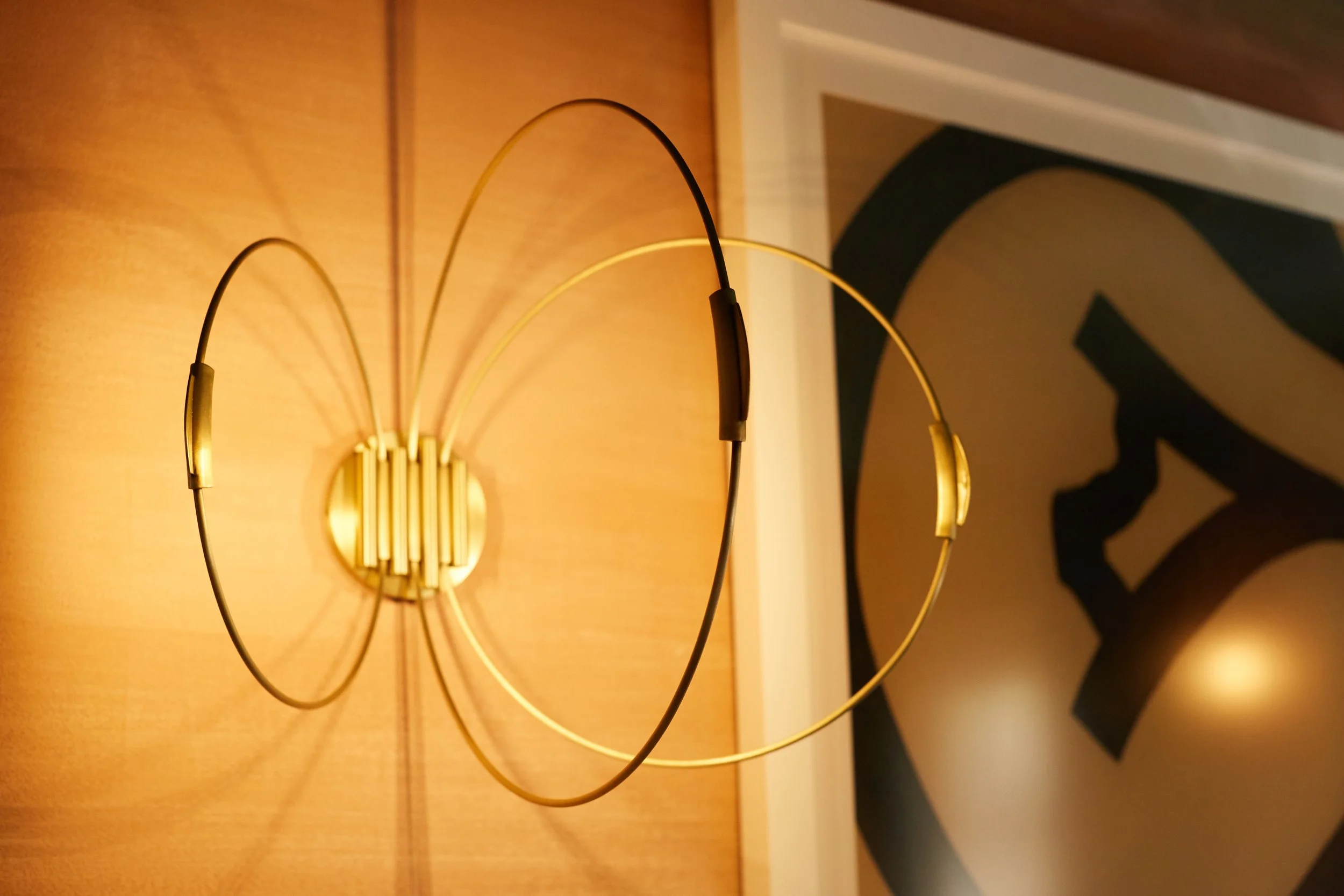
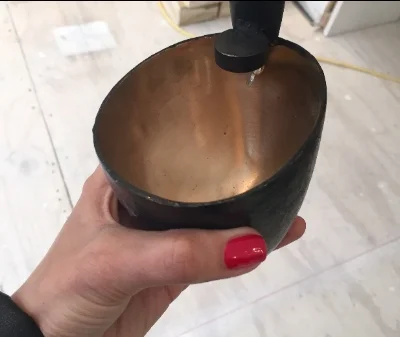
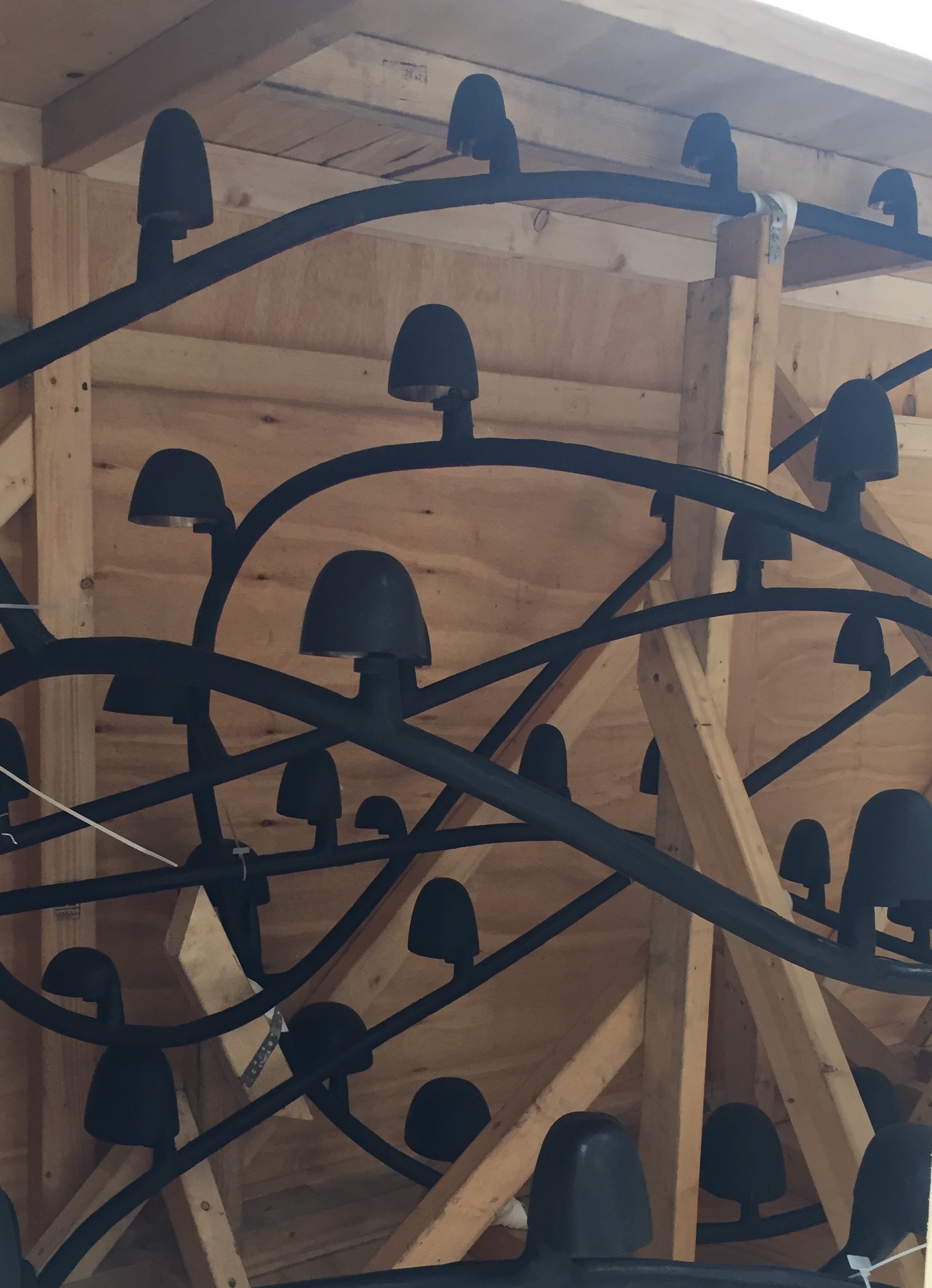
As we discussed the sinuous lines of his illuminated sculpture, how its reflectivity and sheer volume would be filling the lofty dining room of a Tony townhouse on the Upper East Side, I couldn’t help but feel like my path was intersecting this moment and spanning out to somewhere unknown.  My senses were heightened and I had that same feeling when I am somewhere new and unfamiliar.  As I cradled the bronze chalice (that was a part of Frederik’s chandelier) in my hand, I gazed at the gilding inside reflecting back to me, and became electrified by my own possibilities.

IMG_7493.jpg