Every environment tells a story before anyone says a word.
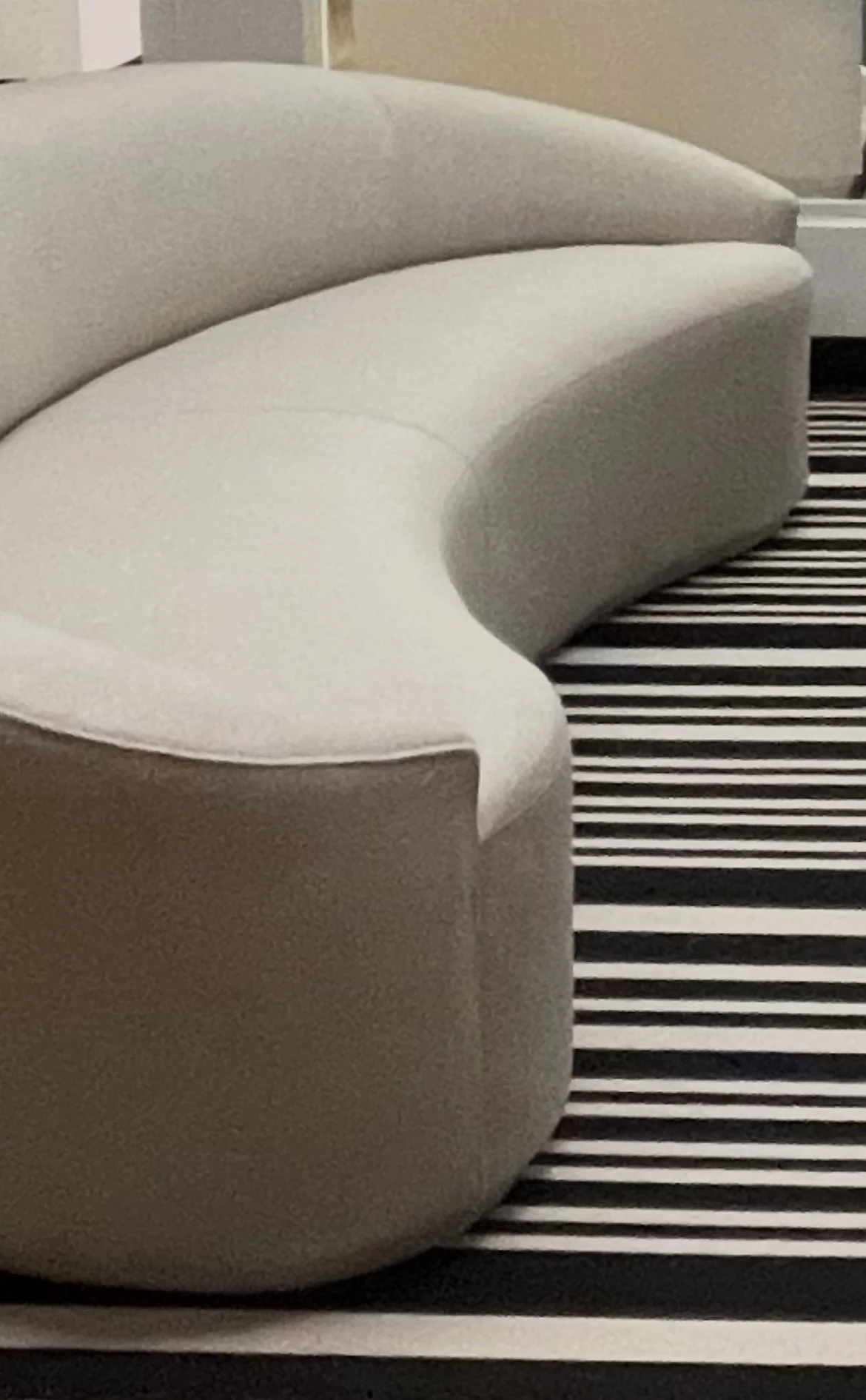
Recently, I had the privilege of designing the reception area for Red Door Community, an extraordinary organization supporting people impacted by cancer.
The Executive Director, Migdalia Torres, shared something that stopped me in my tracks:
“The reception area has transformed the experience of arriving…”
I couldn't stop thinking about the word.
Arriving.
Experiencing the Space After the Reveal
One of my favorite moments as a designer is not the big reveal but what happens weeks or months later. When people have the chance to settle into a newly designed space for a while and describe how that space makes them feel, it is a very special moment for me.
Her words went beyond the furniture or the color palette. She described how people felt.
For years, I've believed that our environments are more than passive backdrops—they actively shape our experience. They communicate before anyone says a word. They can cultivate calm, belonging, connection, and care. They are active participants in how you experience not just your space but also your well-being.
Liminal Spaces
Recently, I was discussing the movie Backrooms with my son, who had just come home after seeing it. He described a labyrinth of empty corridors, vacant office buildings, and anonymous transitional spaces that felt consistently unsettling. My curiosity was piqued so I began to read about it, which led me to a BBC article featuring neuroarchitectural researcher Meredith Banasiak, who explained that liminal spaces heighten our brain's sensitivity to uncertainty because they exist between one destination and the next. Without meaningful environmental cues, our brains remain on alert, constantly trying to determine where we are and what comes next. Banasiak notes that trauma survivors often find these environments especially challenging.
In Backrooms, that idea is taken to its extreme. The building itself becomes a physical metaphor for memories “dissolving into themselves.” What if there is no monster hiding in the shadows but the space itself becomes the villain?
That observation stayed with me because it echoed something I've long believed: environments are not neutral. They shape our emotions, influence our physiology, and quietly impact how we experience a place.
The environment is the actor.
In fact, I wrote about this years ago in Purgatory to Paradise:
"For instance, colors affect your mood. A horror movie uses a completely different tint than a rom-com." (p. 51)
Filmmakers have long understood that environments shape emotion. We deliciously anticipate this long before we’ve settled into our theater seats. Yet when it comes to our homes, hospitals, workplaces, and schools, we often treat the environment as little more than a backdrop. What if we've been overlooking one of the most influential participants in our daily lives?
During my own cancer treatment, I was practicing the art of neuroaesthetics long before I had the scientific language to describe it.
Now, I realized that I hadn’t simply designed a reception area.
I had designed a liminal space.
A threshold.
Why Your Space Matters
We’ve inadvertently parsed out a binary approach to spaces that I find incredibly problematic. For decades, we've treated design as a choice between function and beauty—as though they're separate goals. I think we've been asking the wrong question. I’d rather ask a different set of questions altogether.
In the case of a reception area, what does it feel like to arrive?
Does the space communicate inclusivity? Does it calm the nervous system? Does it encourage connection? Does it make someone feel seen before they’ve spoken a word?
Whether this is a lobby, a hospital, an office, a school, a hotel, or your home, your environment plays a significant part on your sense of belonging, your emotions, your physiology, your nervous system, and ultimately your health. Whether I'm designing a healthcare environment, a workplace, or someone's home, my work begins long before selecting furniture or choosing colors. It begins by asking how people deserve to feel—and how can the environments I create support that.
Red Door Community Field Notes
My intention was to create a space that spoke before anyone ever opened their mouth.
Long before I selected materials, designed the layout and flow of the furniture, or imagined that first impression as those elevator doors opened, I designed for meaning.
How could the space cultivate belonging, comfort, care, and calm for someone walking through the door in active cancer treatment?
As I thought about the space, I wasn't simply selecting furniture. I was thinking about one of humanity's oldest rituals: gathering. Across cultures, gathering has always been one of the ways we create safety and belonging. For thousands of years, people gathered around a fire to share stories, comfort one another, and build community. Two circular sofas shaped like the crescent moon mirrored each other to create conversation and connection. Today, a circular coffee table can quietly serve a similar purpose as that fire. The space invites us—not just to wait—but to gather. And as someone who’s gone through the isolation of cancer, I know connection can be its own medicine.
Instilling Comfort
For me, the greatest measure of a successful project isn't how it photographs—it's how it changes the experience of the people who move through it. Several weeks later, Executive Director, Migdalia Torres shared these reflections:
“The reception area has transformed the experience of arriving at Red Door Community. From the moment members, volunteers, staff, and visitors get off the 4th floor elevator, they describe walking into a space that feels warm, calming, and inviting. The design of the lobby instills a tone for the sense of comfort and belonging that is at the heart of our mission.
For our staff, it's a joy to begin each day in a space that reflects who we are as an organization. The design is both beautiful and functional, creating an environment that immediately communicates care and connection. We continue to receive compliments from members and visitors who often comment on how peaceful and welcoming it feels.”
The Takeaway
Beautiful design isn't simply something we see.
It's something we experience.
The greatest value of a space isn't found in its finishes or furnishings. It's found in the way it impacts the people who move through it. The same environmental principles that filmmakers use to create psychological tension can be intentionally reversed to cultivate psychological safety.
At Red Door Community, I wasn’t just trying to create a beautiful reception area.
I was transforming the experience of arriving.
I was designing the liminal space where someone leaves the outside world and takes their first emotional step into comfort, connection, and belonging.
Because before anyone speaks, the environment already has.
About Field Notes
Field Notes is an ongoing series exploring beauty, neuroaesthetics, biology, culture, and the built environment through the lens of Design Is Medicine™.
Continue the Conversation
If this Field Note resonated with you, I'd love to hear your thoughts. Questions, collaborations, or speaking inquiries are always welcome.
Enjoyed this Field Note?
Subscribe to the Design Is Medicine™ newsletter on LinkedIn for new essays, observations, and research exploring beauty, biology, and the built environment.
Selected Reading
Taylor, Alex. Endless creepy yellow corridors, 30bn TikTok views - and now a Hollywood film, BBC News.
Motzek, T., Büter, K., & Marquardt, G. Environmental Cues in Double-Occupancy Rooms to Support Patients With Dementia. HERD: Health Environments Research & Design Journal.
Syed, Mahwish. Purgatory to Paradise: How Cancer Helped Me Design an Authentic Life. (Chapter 3, “My Fall into the Underworld”).
