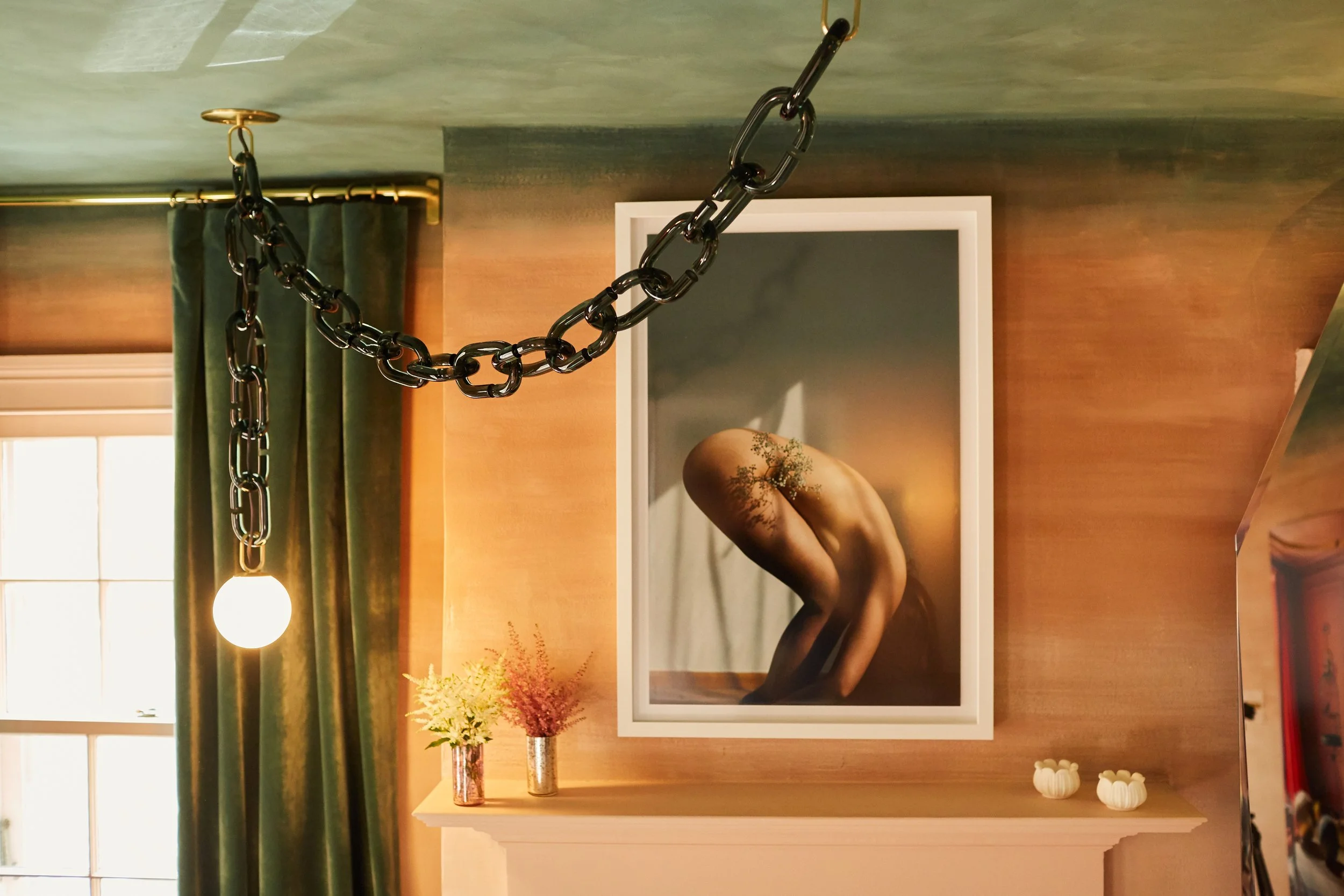
A swagged light fixture in an interior by Mahwish Syed Designs. Photo by Yvonne Albinowski.
From Bling To Biology
Lighting was what I called the “bling” in the room. The chandelier or sconces were the jewelry that added sparkle and panache. Yes, functionality was important, but that usually meant making sure there were locations for the proper amount of downlights in a hallway, enough task lighting in the kitchen to illuminate chopping vegetables, or enough reading lights in a library to feel cozy and erudite. I’d always considered lighting as an artistic sculpture in a space, filling up the vertical volume with personality.
I understood light as mood. I understood it as drama. I understood it as beauty.
I had not yet understood it as information.
It wasn’t until cancer that I began investigating lighting beyond its use as a decorative object and more as a biological input. Why would a diagnosis lead a designer to explore lighting as a relevant player in our health?
Everyone approaches a calamity differently. Some freeze. Some run. Some fight. My approach was research. I wanted to understand the why and how of illness.
As I began researching cancer, I encountered the field of epigenetics—the study of how environmental and behavioral factors can influence the way genes are expressed without changing the underlying DNA sequence. It made me look at my own environment differently.
So I began to investigate the foods I ate, the pots I used, the clothing I wore, the relationships I kept, and the home I lived in. I began to audit every aspect of my environment.
And eventually, I began asking a question I had never thought I’d be asking as a designer: What is the light in this room actually doing to the person experiencing it?
The Last Minute of the Clock
If you compress 300,000 years of our existence on this planet into a 24-hour clock, indoor life occupies roughly the final minute. The past 23+ hours were lived outside, under the sun and the stars, in darkness with the exception of firelight, and in tune with the cycles of the seasons.
Firelight dominated indoor illumination for most of human history until we began harnessing gas and, later, electricity in the late nineteenth century.
In just a few generations, we went from a world in which light was largely dictated by the sun to one in which we can produce daylight at any hour, in nearly any place. Fast forward to today. We’ve made incalculable strides in our ability to control our indoor environments, but one essential part of our biology hasn’t caught up.
Our ancient circadian inheritance is very much at play today as it was for millennia, despite being bathed by modern LED lighting indoors, long after the sun has set.
I am not saying that modern lighting is inherently bad. It’s that we have radically changed the light environment without fundamentally changing the biological systems that evolved within a natural light-dark cycle.
Our technology changed faster than our biology did.
Junk Light and the Undernourished Body
We all know that junk food is bad for us. We extol how empty calories feed but don’t truly nourish our body.
That made me wonder: What does “junk light” look like?
As I started reading the research, I encountered a concerning body of evidence around circadian disruption, night-shift work, light-at-night exposure and cancer.
I want to be careful here. This research does not allow me to say that artificial light causes cancer. It does, however, raise questions about the biological consequences of disrupting our normal light-dark cycle.
The International Agency for Research on Cancer (IARC) classified night-shift work as “probably carcinogenic to humans” (Group 2A), based on limited evidence in humans, sufficient evidence in experimental animals, and strong mechanistic evidence. The human evidence included breast, prostate, colon and rectal cancers.
Night work involves a constellation of exposures and behaviors, including altered sleep timing and circadian disruption. But the classification made one thing very clear to me: the relationship between light, circadian biology, and cancer was serious enough for me to investigate further.
Then I found research more directly focused on light at night. A 2021 systematic review and meta-analysis found higher breast cancer risk among women with greater light-at-night exposure, including both indoor and outdoor exposure.
A second 2021 dose-response meta-analysis of 17 epidemiological studies found a similar positive association, with somewhat stronger associations among premenopausal women and women with estrogen-receptor-positive breast cancer.
A 2023 meta-analysis of 21 case-control and cohort studies, encompassing more than 734,000 participants, found a similar association between light-at-night exposure and breast cancer risk.
A 2011 review in the Journal of Pineal Research examined how the nocturnal melatonin signal interacts with molecular, metabolic, and hormonal pathways involved in breast cancer, including estrogen-receptor signaling, and explores the consequences of disrupting that signal with light at night.
This was the part that stopped me.
What if my own diagnosis was affected by my own light environment? What if the light I used at night contributed to circadian disruption by compromising my normal nighttime biology, including melatonin signaling, and influenced my hormonal or metabolic pathways?
I cannot categorically say that it did. And I would never tell someone that their lighting caused their cancer. But there was enough scientific evidence—and enough unanswered questions—for me to become deeply curious about the differences between contribution and causality.
And the relationship between light and health isn't limited to cancer. Rowan Jacobsen in his book, In Defense of Sunlight, mentioned the resurgence of rickets in children in industrialized countries due to lack of sunlight exposure from modern indoor living. His exploration of what happens when we separate ourselves from natural light reinforced a question I had already begun asking: What happens when the environment our biology evolved for is radically different from the environment we've now created?
Before I even read his book, I’d gotten my certification in Applied Quantum Biology so that I could better understand the relationship between our light environment and our health. There is growing evidence that our light environment matters to our health at every stage of our lives. We may not have all the answers. But I believe we have enough evidence to start asking better questions.
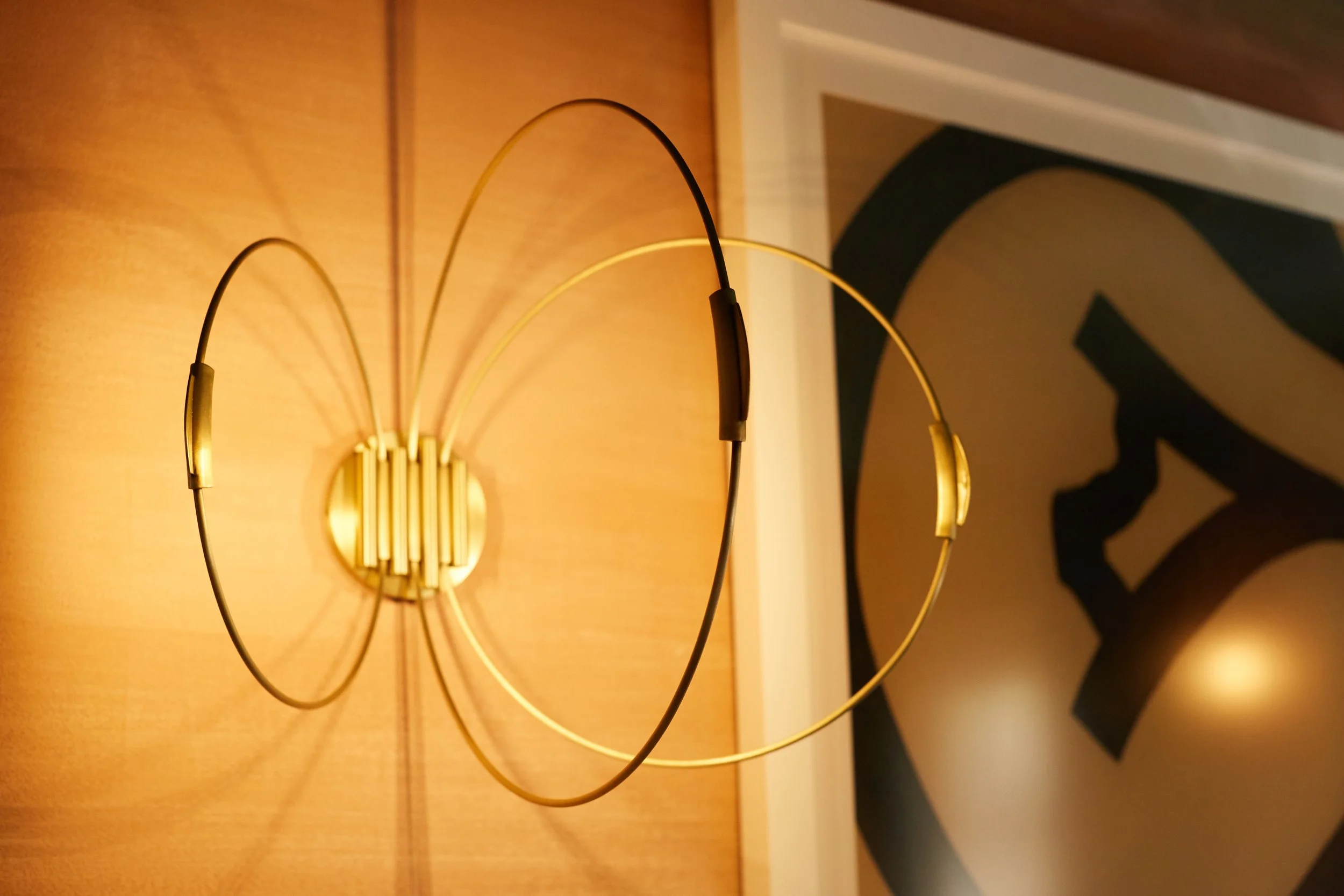
Close up on a sconce in an interior by Mahwish Syed Designs. Photo by Yvonne Albinowski
A Designer Asking Different Questions
My question changed from “Is this light beautiful?” to “What effect is this light having on my biology?”
What wavelengths are present? When is the exposure happening? Where in the room is the light coming from? How long does the exposure last? Is there flickering? What is the relationship between light and dark? How does darkness affect our circadian health and is our environment supporting both?
I began thinking about light not as a single design variable, but as an environmental health experience.
I started applying circadian principles within my design work. And I also realized something very important. When most projects take months and years to complete, what could I share that helps people now?
The title of my book, Purgatory to Paradise, came out of my desire to break out of the waiting room and design a paradise—a healing environment—that is in tune with our ancient biology but something that didn’t require a million-dollar budget and a couple of years.
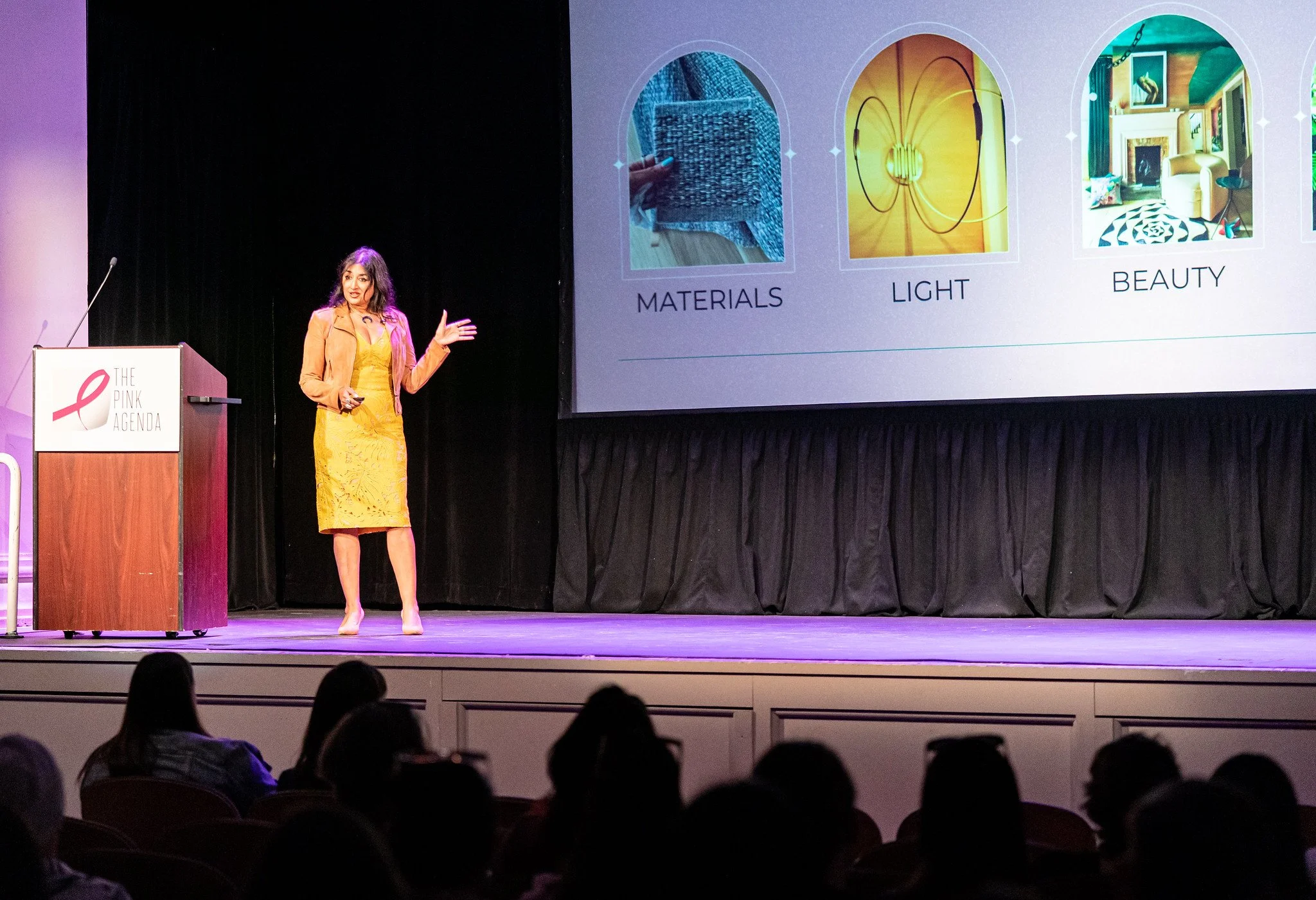
I began to share my light protocols that anyone, anywhere could use. My workshops at Mount Sinai, the JCC, and other institutions came out of my desire to bring the healing power of design to the participants on both sides of the medical aisle, patients and providers. That was my Claim Your Paradise program, which has now evolved into Design Is Medicine™.
Because while I love designing beautiful spaces, I don't believe beauty should require waiting for the perfect renovation, the perfect budget, or the perfect moment. Sometimes the most effective intervention is a simple change we can make within our space. Cancer taught me to claim my paradise now–to create a healing environment without waiting for tomorrow.
If I could help one person look around and see their light environment differently, then maybe they don’t have to go through the pain and suffering I did.
Nourishing the Body With Light
We have become extraordinarily good at designing our lighting to be efficient and cost-effective. Perhaps the next step is learning how to make it harmonize with our ancient biology. If light is indeed a nutrient, then how can we feed ourselves the right kind of light?
I'm becoming more interested in what kind, how much, and—just as importantly—when to design for the darkness to return. Our Underworld is just as important as our Upperworld.
What if a smart home isn’t about turning your light on with your phone but becoming wiser about designing the lighting to be aligned with your ancient circadian biology?
For architects and designers, that means asking different questions.
Instead of asking: Does this fixture look beautiful?
We can ask: How is this light nourishing our bodies?
Are we prioritizing our lighting design for greater convenience or energy efficiency—or for better health? Can our lighting be both? And what does that look like?
These are the questions I’m continuing to explore through my work in Design Is Medicine™.
Beyond the Bling
I still love the bling.
I still love the chandelier, the glow, the drama, the way beautiful light can transform a room.
Now, I know that the light in a room is doing more than just illuminating it. It may be one of the most consequential environmental inputs we experience every day—and we are only beginning to understand what our bodies do with it.
So when you look at your chandelier tonight, remember: there is more to light than what meets the eye.
About Field Notes
Field Notes is an ongoing series exploring beauty, neuroaesthetics, biology, culture, and the built environment through the lens of Design Is Medicine™.
Continue the Conversation
If this Field Note resonated with you, I'd love to hear your thoughts. Questions, collaborations, or speaking inquiries are always welcome.
FURTHER READING
Research
International Agency for Research on Cancer (IARC). Night Shift Work. IARC Monographs, Volume 124. 2020.
IARC classified night-shift work as “probably carcinogenic to humans” (Group 2A), based on limited evidence in humans, sufficient evidence in experimental animals, and strong mechanistic evidence.
Read the IARC Monograph
Lai, K. Y., Sarkar, C., Ni, M. Y., et al. “Exposure to light at night (LAN) and risk of breast cancer: A systematic review and meta-analysis.” Science of the Total Environment. 2021;762:143159.
A systematic review and meta-analysis of 14 observational studies examining indoor and outdoor light-at-night exposure and breast cancer risk.
Read on PubMed
Filippini, T., Vinceti, M., Wise, L. A., et al. “Light at night and risk of breast cancer: a systematic review and dose-response meta-analysis.” International Journal of Health Geographics. 2021;20:44.
A dose-response meta-analysis of 17 epidemiological studies examining the relationship between light-at-night exposure and breast cancer risk.
Read on PubMed
Luo, Z., Liu, Z., Chen, H., et al. “Light at night exposure and risk of breast cancer: a meta-analysis of observational studies.” Frontiers in Public Health. 2023;11:1276290.
A meta-analysis of 21 cohort and case-control studies involving more than 734,000 participants.
Read on PubMed · Read the full article
Blask, D. E., Hill, S. M., Dauchy, R. T., et al. “Circadian regulation of molecular, dietary, and metabolic signaling mechanisms of human breast cancer growth by the nocturnal melatonin signal and the consequences of its disruption by light at night.” Journal of Pineal Research. 2011;51(3):259–269.
A review examining the relationship between the nocturnal melatonin signal, circadian disruption, and molecular, metabolic, and hormonal pathways involved in breast cancer.
Read on PubMed · Read the full article
Books
Jacobsen, Rowan. In Defense of Sunlight: The Science of a Natural Light Revolution. (2026).
An exploration of sunlight, modern indoor life, and what we may lose when we separate ourselves from the natural light environment our biology evolved within.
Syed, Mahwish. Purgatory to Paradise: How Cancer Helped Me Design an Authentic Life (2022).
My memoir about cancer, healing, resilience, and the journey that ultimately led me to explore how our environments can support the lives we want to live.